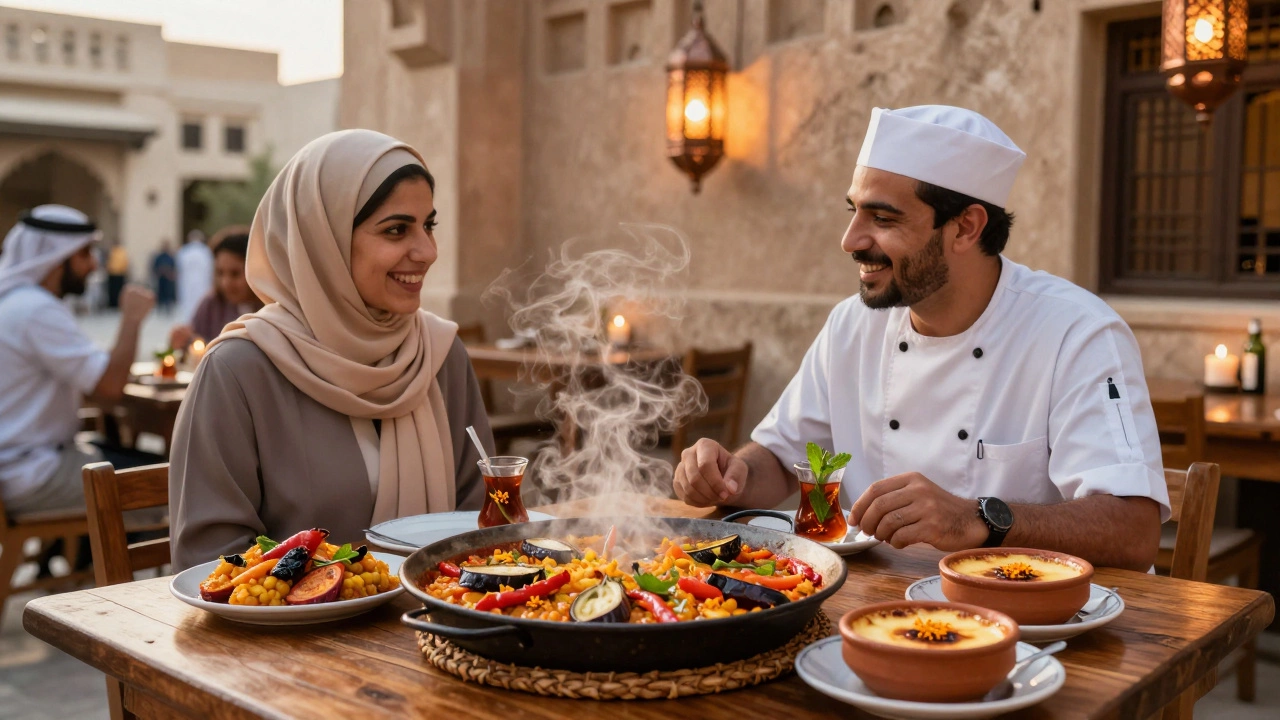
Dubai is often talked about for its skyscrapers, luxury malls, and desert safaris-but its food scene is just as unforgettable. Many visitors assume Middle Eastern cuisine here means shawarma and hummus only. But dig a little deeper, and you’ll find layers of influence from Spain, Catalonia, and beyond. This isn’t just fusion for show-it’s the result of decades of migration, trade, and cultural exchange. You can taste it in the saffron-infused rice dishes that mirror paella, or in the smoky grilled seafood that feels like it came straight off the coast of Barcelona. Even the way locals sip mint tea with a hint of orange blossom isn’t just tradition-it’s a quiet nod to Catalan sweets and herbal infusions.
Some travelers looking for nightlife connections might search for ways to hook up dubai, but those same people often miss the real pulse of the city: its kitchens. While the nightlife gets attention, the real magic happens in family-run eateries tucked into Al Fahidi or behind the souks of Deira, where recipes are passed down like heirlooms. These places don’t advertise on Instagram. They don’t need to. Word of mouth, slow-cooked lamb, and fresh fish caught at dawn keep them full every night.
How Spanish and Catalan Flavors Made It to Dubai
The Spanish and Catalan influence didn’t arrive with tourists. It came with workers. In the 1980s and 90s, thousands of Spaniards and Catalans moved to Dubai to work in construction, hospitality, and engineering. Many brought their families. Others stayed long enough to marry local women. Over time, their kitchens became blending zones. A Catalan grandmother taught her Emirati daughter-in-law how to make romesco sauce. A Spanish chef from Valencia trained local cooks to use saffron properly-not just as a color, but as a flavor anchor.
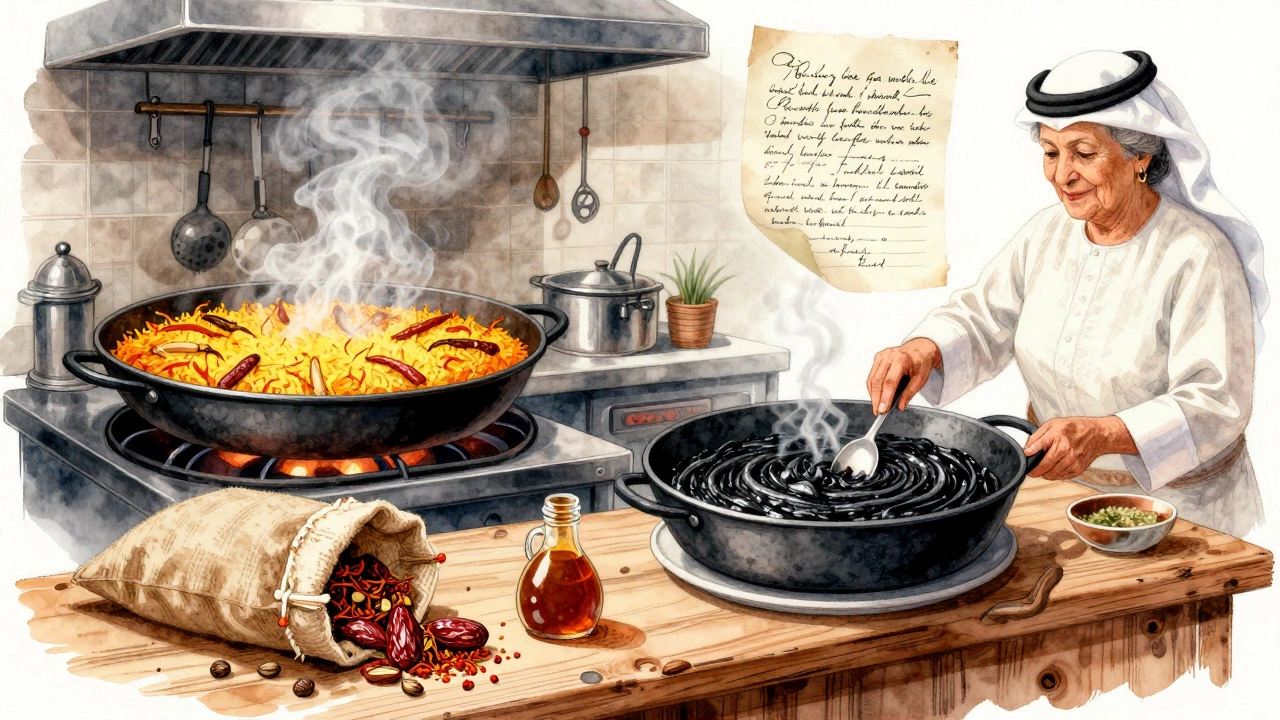
Today, you can find restaurants in Dubai that serve arròs negre (black rice with squid ink) alongside maqluba (spiced rice with chicken and eggplant). The same chef might use harissa from North Africa, smoked paprika from Spain, and cardamom from India-all in one dish. This isn’t random. It’s intentional. Dubai’s food culture thrives on layering, not replacing.
What You Can Actually Eat That Tastes Like Spain or Catalonia
If you’re looking for the real deal, here’s what to order:
- Churros con chocolate-not the greasy ones from tourist spots, but the ones made fresh at La Taberna in Jumeirah, dipped in thick, dark chocolate that’s been simmered for hours.
- Escalivada-roasted eggplant, bell peppers, and onions, drizzled with olive oil and a touch of sherry vinegar. Served cold, it’s a staple at weekend family lunches.
- Fideuà-a noodle-based dish similar to paella, but with short, thin noodles instead of rice. Often made with squid or shrimp, it’s a favorite among expat families who miss home.
- Crema Catalana-a custard dessert with a caramelized sugar top, identical to crème brûlée but with a hint of cinnamon and lemon zest. Found in almost every bakery in Dubai’s expat neighborhoods.
These dishes aren’t labeled as "Spanish" on menus. You have to ask. Most waiters will say, "Oh, that’s just how we do it here." And that’s the point. It’s not exotic. It’s everyday.
Why This Blend Works So Well in Dubai
Dubai doesn’t just accept foreign flavors-it adapts them. Spanish olive oil? Replaced with local date syrup in some sauces. Catalan garlic soup? Thickened with crushed dates instead of bread. The result? Dishes that feel familiar but still surprise you.
This flexibility comes from Dubai’s history as a trading port. For centuries, merchants from East Africa, India, Persia, and Europe brought spices, ingredients, and techniques. The city didn’t reject them. It absorbed them. Today, you’ll find a Moroccan tagine next to a Lebanese kibbeh, and a Catalan-style grilled octopus right beside a Emirati machboos. No one bats an eye.
Even the spice blends reflect this. A typical Dubai kitchen might use cumin, coriander, and saffron-standard in Emirati cooking-but also add smoked paprika and dried oregano, thanks to Spanish influence. The result? A flavor profile that’s layered, balanced, and never predictable.
Where to Find the Best Spanish-Catalan Fusion in Dubai
Forget the fancy rooftop restaurants with overpriced cocktails. The best fusion food is in places that don’t have websites:
- Al Sabour Restaurant (Al Karama)-family-owned since 1992. Their fideuà is cooked in a clay pot over charcoal. Ask for the version with octopus.
- La Casa del Sabor (Jumeirah Beach Residence)-run by a Spanish couple who moved here in 2001. Their escabeche (marinated fish) is so good, locals bring guests from Saudi Arabia just to try it.
- Al Maha Bakery (Deira)-a tiny shop that makes Crema Catalana every morning. They use real vanilla beans and burn the sugar with a blowtorch. No menu. Just walk in.
These places don’t take reservations. They don’t post on social media. You find them by asking locals. Or by wandering.
The Hidden Cost of Cultural Blending
Not everything about this fusion is beautiful. Some traditional Emirati dishes have been pushed to the margins as Spanish and Catalan flavors become more popular. Older generations worry their recipes will vanish. A 72-year-old woman in Bur Dubai told me last year, "My granddaughter makes paella for her friends. But she doesn’t know how to make harees. She says it’s too boring. That breaks my heart."
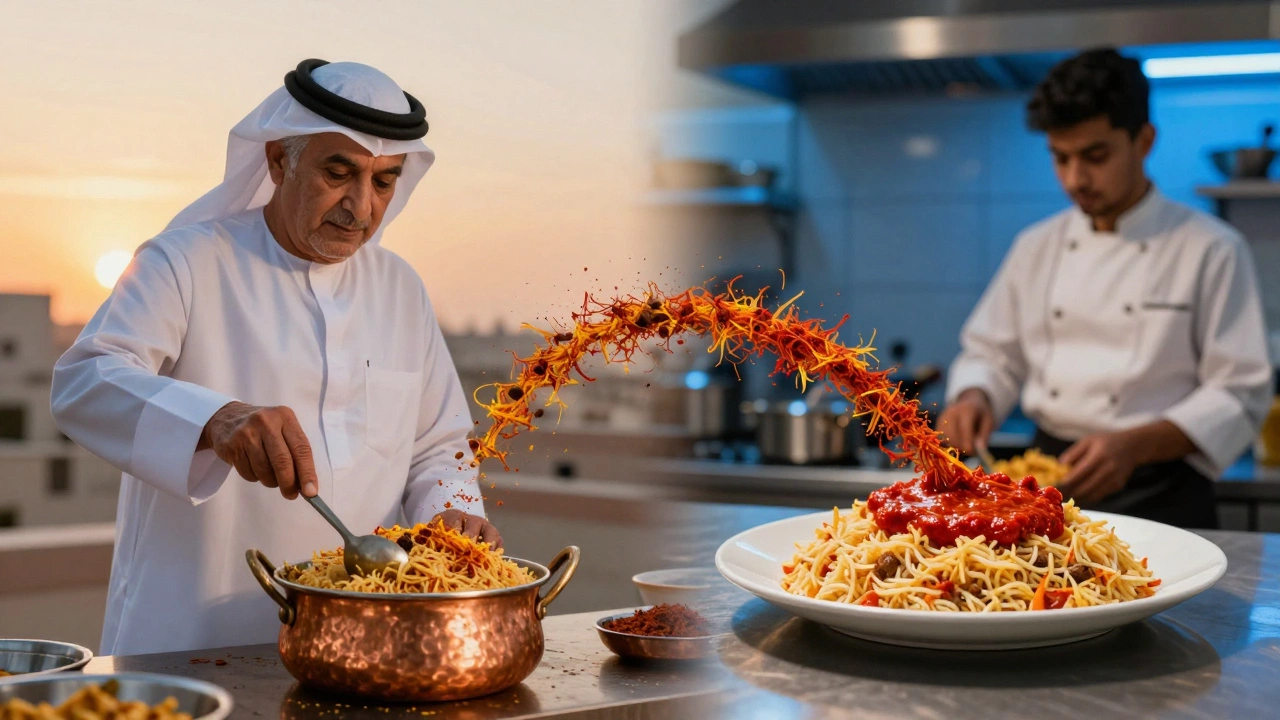
But change isn’t always loss. Many young Emirati chefs are now reclaiming their roots by blending them with what they’ve learned. One chef in Al Quoz now serves a dish called "Machboos with Romesco"-a traditional Emirati rice dish topped with Spanish red pepper sauce. It’s won awards. And it’s changing how people see local food.
What You Should Know Before You Go
Dubai’s food scene isn’t about luxury dining. It’s about connection. The best meals happen when you sit at a plastic table with strangers, share a plate, and ask, "Where did you learn this?"
Don’t go looking for "authentic" Spanish food. You won’t find it. What you will find is something better: food that’s alive, evolving, and deeply personal. And if you’re curious about the city’s nightlife, you might hear rumors about prostitute in dubai or dubai prostitute-but those stories are distractions. The real story is in the kitchen.
Final Thoughts: Food as a Mirror
Dubai’s cuisine doesn’t just feed people. It tells stories. The Spanish influence? That’s the story of migration. The Catalan touches? That’s the story of adaptation. The Emirati base? That’s the story of resilience.
When you eat here, you’re not just tasting spices. You’re tasting history. And if you pay attention, you’ll realize the most powerful thing about Dubai isn’t its gold-plated buildings. It’s its ability to take fragments of the world and turn them into something new-something that belongs to everyone, and yet, to no one but itself.